World War II: When Evansville went to work
EVANSVILLE, Ind. (WFIE) - On December 7th of 1941, the world was turned upside down, and Evansville was soon to follow.
“We believe if it hadn’t been for the efforts of towns like Evansville, this war would’ve lasted a lot longer,” Dona Bone, docent with the Evansville Wartime Museum, said.
In a post-Great Depression era, almost 20 percent of Evansville’s population was looking for jobs.
And with World War II on the horizon, city officials laid out their case to the federal government.
“We’re centrally-located in the United States, away from the coasts. We had rail lines that ran North-South and East-West. We had a navigable river, and we had an airport with land adjacent for building. And we had a workforce looking for jobs,” Bruce Green, volunteer with the Evansville Wartime Museum, said.
And it wasn’t long before Evansville went to work.
“So when these contracts started coming in, the people of Evansville were excited to get up and start working, and bring that economy back, as well as the soldiers,” Bone said.
And tens of thousands of people came to work with them.
“This city, and the people from the surrounding communities, came here to make sure we were able to win this war,” Green said.
Dozens of existing and new companies in Evansville, like Chrysler, put all their resources towards making war products.
There were over 300 items made in Evansville during World War II. Items as big as planes and as small as bullets.
In fact, 96 percent of the .45 caliber ammunition used by the U.S. and their allies was produced in Evansville.
“A lot of important things being built here. And a lot of things that helped win the war,” Green said.
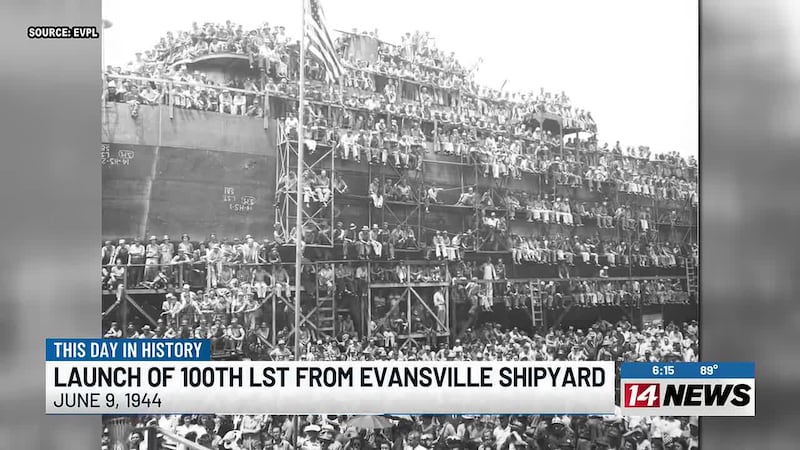
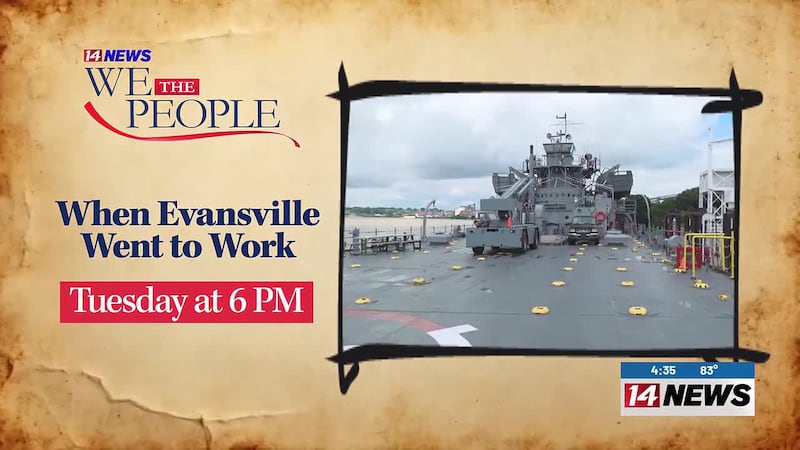
One of the most notable things built here was the Land Ship Tanks, or LSTs.
Over 167 LSTs were made at Evansville’s shipyard, which employed over 20,000 people.
And next to the airport, Republic Aviation, where over 6,000 P-47 Thunderbolt fighter planes were created.
“The guys in World War II said, If you want to get a girl, fly a P-51. If you want to come home to that girl, fly a P-47,” Homer Nestrick, docent with the Evansville Wartime Museum, said.
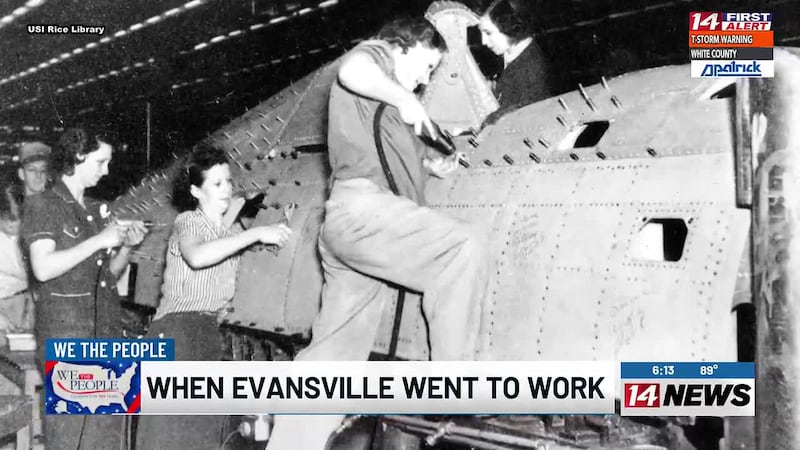
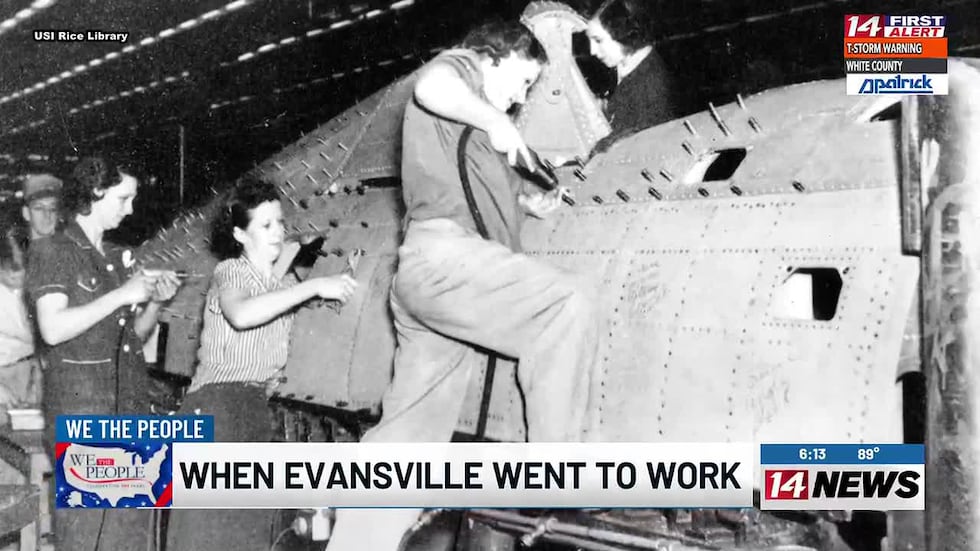
With the men off fighting, it was the women left to fill the factories.
“This nation learned something from that war. That women were able to do things that they hadn’t been allowed to do previously,” Green said.
Many women worked all day at the factories and then came home to make dinner and take care of the children.
“If it hadn’t been for the women who left their homes, really for the first time, to work outside of the home, if it hadn’t been for them, we probably wouldn’t have won the war,” Nestrick said.
And it wasn’t just women who stepped into new roles.
African-Americans were able to be hired into contracts for the first time.
School children were holding scrap drives and bringing their coins to school to help move the war effort along.
Evansville residents were opening their homes to the influx of factory workers coming to the city.
“Everybody was doing their part. Even if it meant I’m sharing my house with people. Whatever you can do to help win the war,” Green said.
Everyone working to support the war effort had one common motivation keeping them going.
“Everybody had someone they loved in the war. That was their motivation. Bring their fathers, their brothers, their uncles, we need to get them back home,” Bone said.
And important lessons were learned right here in Evansville.
“As a nation, when we work together, nobody can be stronger than us,” Green said.
Evansville was recently recognized as a World War II Heritage City by the National Park Service.
This distinction is only given to one city from each state or territory in the U.S.

Copyright 2026 WFIE. All rights reserved.